|
"Eighteenth Century Worlds" (ECW) is a list in which members are invited to write to one another about the period 1660-1830. We read together and discuss the literature, music and art that emerged across Europe in the "long eighteenth century." The noun "worlds" is meant to suggest how many kinds of communities, places, and currents of thought the time span includes. To subscribe click here The list was opened in early November 2001 by Joanne Pope. She was listowner and I was moderator. As with the other list we ran together (Women Writers), in January 2003 she made me listowner and then left the list. Leslie Robertson is now my fellow moderator. The list is now intended to serve the needs and desires of 1) professional scholars in European culture and the enlightenment; and 2) people who enjoy reading about the long 18th century. I ask people who join to introduce themselves and ask all to follow the rules for courtesy (see below). The list originated as a development from a small subgroup which began on EighteenthCenturyNovels, a Yahoo group meant for people to read 18th century novels. On that list there was a reading and group-wide discussion of Boswell's Life of Johnson, followed by Johnson's Journey to the Western Islands and Boswell's A Tour of the Hebrides. A few of those who had participated in this read felt uncomfortable on that list so we opened our own and continued here with Fanny Burney's Journals and Letters (see "On Reading Divergent Fanny Burney d'Arblays"). We then went on to Johnson's Ramblers, Idlers and Adventurers, Johnson's Rasselas, Life of Savage (and some of us Richard Holmes's Dr Johnson and Mr Savage), Beryl Bainbridge's According to Queeney and Boswell's London Journal, 1762-63, and Adam Sisman's Boswell's Presumptuous Task: The Making of the Life of Dr. Johnson We read and discussed many books together for about 10 years. At this point (April 2011), we have stopped reading
groups and schedules for groups for now as there are no longer enough people who want to do this. The list is now a general
list for discussion for any and all topics relating the log 18th century, from books, to art, to music, to history,
to film. Below is a record of what we have done and continuing goals for the future.  We have now turned this "Johnson's circle" group into a group for reading non-fiction. We have thus far read and discussed The
Selected Letters of Lady Mary Wortley Montagu, James Clifford's
biography, Hester Lynch Piozzi (Mrs Thrale), Edward Gibbon's
Decline and Fall of the Roman Empire, The Journal of
Walter Scott, as edited by W. E. K. Anderson in the Canongate
series, Mary Wollstonecraft's Letters written During a Short
Residence in Sweden, Norway and Denmark, Jean-Jacques Rousseau's
Les Reveries du promeneur solitaire (available in Peter
France's translation as Reveries of the Solitary Walker for
Penguin), Andrew McClellan's Inventing the Louvre, Jonathan
Bate's John Clare: A Biography, Goethe's Italian
Journey, ed. Thomas P. Saine and Jeffrey L. Sammons,
trans. Robert R. Heitner (Yale paperback edition), John Buchan's Crowded with Genius: The Scottish Enlighenment, Edinburgh's Moment of the Mind, and Elizabeth Grant [Smith]'s Memoirs of a Highland Lady (available in an
unabridged paperback Canongate classic, ed., introd. Andrew
Tod). People were also invited to read one or other of her other
memoirs, The Highland Lady in France, 1843-1845 and The
Highland Lady in Ireland (also available in the same Canongate
series, with Patria Kelly as a co-editor); and Linda Colley's Captives, and Olaudah Equiano's Interesting Narrative of Olaudah Equiano, or Gustavus Vassa, The African, Written by Himself  For spring into summer 2008 we read John Brewer's Pleasures of the Imagination: English Culture in the Eighteenth Century and Stella Tillyard's Citizen Lord: A Life of Edward Fitzgerald (a sequel to her book on the four Lennox sisters' letters, Aristocrats, and then (we did it backwards, yes), her Aristocrats: Caroline, Emily, Louisa, and Sarah Lennox, 1740-1832. We then watched and discussed the mini-series 6 part film adaptation by Harriet O'Carroll; after which we read Lucy Hutchinson's remarkable depiction of the 17th century English civil war, autobiography as biography, Memoirs of the Life of Colonel Hutchinson (the 1995 revised edition by N. Keeble is the one the pages are taken from). The fall of 2008 we read the Memoirs of Madame Vigee-LeBrun, using the good English translation by Sian Evans (Camden Press, 1989) of a recent edtion of the complete text in French of Souvenirs by Claudine Herrmann. Then we read and discussed William McCarth's Anna Barbauld: Voice of the Enlightenment. For summer 2009 we read a selection of memoirs and biographies: Kathleen Jones's : Passionate Sietrhood: The Women of Wordsworth's Circle, Betty Rizzo's Companions without Vows: Relationships Among Eighteenth-Century Women, a group biography where Rizzo tells the lives of mistresses and their paid companions; any biography of Hester Thrale Piozzi (the recommendation is William McCarthy's Hester Thrale Piozzi: Literary Woman; or any biography of Charles James Fox (the recommendation is David Powell's Man of the People. We also had threads (by me) on and Margaret Drabble's quirky but related strongly to the 18th century memoir, Patterns in the Carpet. I posted about Valerie Crossy's Jane Austen in Switzerland too. For fall 2009 I've been cross postings from Trollope19thCStudies about John Sutherland's important Life of Scott and we are going to center our reading and discussions also on Jeanne-Marie Manon's memoirs, a translation of this, her letters, biographies, and also Madame Campan's memoir of Antoinette and her life and Madame Roland's memoir of her life. I mean myself to read and post on Gita May's biography of Roland, Madame Roland and the Age of Revolution. Then in November 2009 we returned to Johnson (at long last, in our end is our beginning) and people had a choice of reading David Nokes or John Wain's biography. Alternatives include Marilyn Yalcom's account of French women's memoir of the revolution, Blood Sisters and Caroline Moorehead's Dancing to the Precipice: The Life of Lucie de la Tour Du Pin, Eyewitness to an Era. We are now reading Christine Pevitt-Algrante's Madame de Pompadour. For April through June 2010, read Jenny Uglow's William Hogather: a life and a world.  This summer wread Francine du Plessix-Gray's At Home with the Marquis de Sade and Sara Maza's Private Lives and Public Affairs, a study of the causes celebres and court cases published in 18th century France.  A second general discussion group has been devoted to all forms of fiction, and this is meant to include poetry and plays. We have thus far read and discussed in a scheduled way Walter Scott's
Kenilworth (April-May), Maria Edgeworth's Belinda,
Sophia Lee's The Recess, Walter Scott's Old
Mortality, Germaine de Stael's Delphine, Charles-Louis
de Secondat, baron de Montesquieu's Persian Letters, and (for
a third novel by Scott), Walter Scott's Guy Mannering, Ann
Radcliffe's Romance of the Forest, Diderot's La
Religieuse (The Nun) and Le Neveu de Rameau
(Rameau's Nephew), Charlotte Smith's The
Old Manor House, Henry Fielding's Amelia,
Pope's The Rape of the Lock, Byron's The Two
Foscari, Mary Shelley's The Last Man, Tobias Smollett's
The Expedition of Humphry Clinker, Jean-Jacques Rousseau's
Julie, ou La Nouvelle Héloise, and Burney's Evelina:
or, the History of a Young Lady's Entrance into the World and
Cecilia, or The Memoirs of an Heiress; Frances Sheridan's
Memoirs of Sidney Biddulph and Mary Hays's Memoirs of
Emma Courtney, and for two months modern historical novels
individually chosen (e.g., Emma Donoghue's Slammerkin), Charles Brockden
Brown's gothic Wieland,
Mary Brunton's Discipline, Goethe's Elective
Affinities; William Cowper's The Task and some of his
shorter poems and George Crabbe's The Village, The
Borough, and Tales; and Fanny Burney's Camilla; or, A Picture of Youth  We then began an ambitious project of reading through the drama
of the era from a few Jacobean, Caroline,and Commonwealth plays
through (using anthologies), many of the plays of the Restoration,
18th and early 19thcentury. We first read
from a choice of John Fletcher The Tamer Tamed, James
Shirley Hyde Park, and The Lady of Pleasure, Richard
Brome The Jovial Crew and The Antipodes; Fletcher
Humorous Lieutenant, and Beaumont The Knight of the
Burning Pestle; Margaret Cavendish's Bell in Campo,
Abraham Cowley's Cutter of Coleman Street or Thomas
Killigrew's Parson's Wedding; Fletcher Maid's
Tragedy, A Wife for a Month and Shirley The
Traitor. We chose to read the plays in three Restoration Comedies, edited by Dennis Davison; Six Restoration Plays edited by John Harold Wilson, and Four Libertine Plays, edited by Deborah Payne Fisk. These were as follows: Etheredge's She Would If She Could; Sedley's The Mulberry Garden (in Davison); Dryden's Marriage a la Mode (in Davison) and William Wycherley's The Country Wife (in Davison and Wilson); John Vanbrugh's The Relapse (in Davison) and Etheredge's The Man of Mode; or Sir Fopling Flutter (in Wilson & Fisk); Dryden's All for Love; or The World Well Lost and Otway's Venice Preserved; or A Plot Discovered (in Wilson); Congreve's The Way of the World and Farquhar's The Beaux' Strategem (in Wilson); Shadwell's The Libertine (in Fisk) and Durfey's A Fond Husband (in Fisk); Otway's Friendship in Fashion (in Fisk) and Ravenscroft's London Cuckolds (available in a separate edition in a version by Terry Johnson, published by Methuen). Over the winter, spring and summer of 2009 a few of us read Richardson's Clarissa in (almost) real calendar time. I've done this once before; this time I discussed with members of the list some of the criticism of the book, and the 1991 film adaptation, Clarissa, directed by Robert Bierman, written by David Nokes & Janet Barron, and produced by Kevin Loader. Then we will go on to read Ian McEwan's Atonement and watch & discuss the 2007 film adaptation diorected by Joe Wright, written by Christopher Hampton, produced by Tim Bevan, Atonement, as it has been suggested by Jocelyn Harris that the Booker Prize nominee alludes to Clarissa and the film is also a free adaptation, (see the allusion to Lovelace's dream of a ferris wheel) of Richardson's novel. For summer 2008 we also read and discussed Lauren Carroll's Four Seasons, a historical novel; with a history of the Jigsaw. Come January/February 2010 we are set to read Choderos de LaClos's Les Liaisons Dangereuses, some of us in English translation (there are several) and others in the original French; we are also discussing four film adaptations (1960 Les Liaisons Dangereuses by Vadim; 1988 Les Liaisons Dangereuses by Frear and Hampton; 1989 Valmont by Miles Forman, and 1999 Cruel Intentions by Roger Kumble. We discussed and I posted about Henry Fielding's Tom Jones, and the 1997 WBGh/Meridian mini-series film adaptation, Tom Jones, screenplay Simon Burke, director Metin Hüseyin, producer Suzanne Harrison. 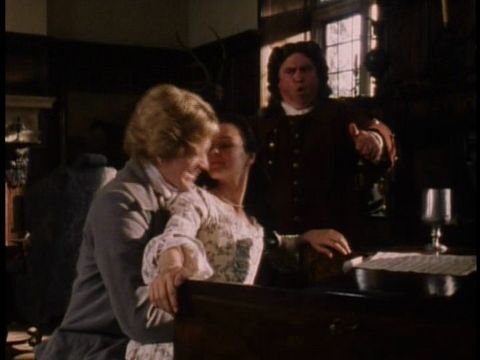 Summer 2010 I read and posted about Sade's La Marquise de Ganges and Eugenie de Franval, Retif de la Bretonne's Ingenue Saxancour, Charlotte Smith's Montalbert and Anne Radcliffe's Sicilian Romance and Mysteries of Udolpho 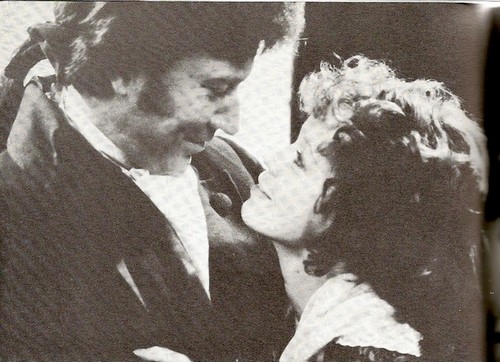 Last spring (2010) I embarked on a marathon reading of all Winston Graham's splendid Poldark novels and have been watching and writing about both BBC Poldark series, producer Morris Barry, screenplays Jack Pullman & Alexander Baron, directors John Wiles & Paul Arnett (among others). Thus far I have posted and written blogs about Ross Poldark, Demelza, Jeremy Poldark, Warleggan, Black Moon and about Cornwall and the mini-series, Graham's Poldark's Cornwall and Robin Ellis's Making Poldark. Next up is The Four Swans. 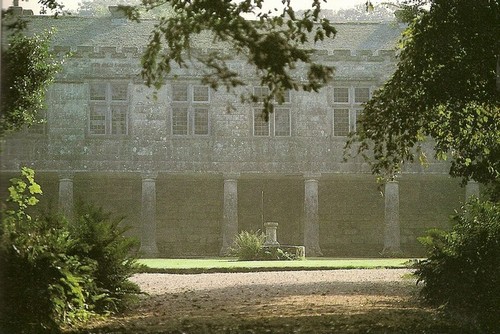 We also encourage and start threads on books people happen to be reading. I and a few others have written on Maria Edgeworth's Patronage, Elizabeth Inchbald's A Simple Story and Samuel Richardson's Pamela and Clarissa, Charlotte Smith's Ethelinde, or the Recluse of the Lake, Louise D'Epinay's Madame de Montbrillant, Francoise de Graffigny's Letters from a Peruvian Woman, Germaine de Stael's Corinne, ou l'Italie and Andrea di Robillant's A Venetian Affair. We have discussed biographies of 18th century people, plays and poetry and shared texts online; we discuss films set in the 18th century. Postings on articles and journals are of interest to this list. I invite members to write about novels, plays, and poetry they have read, are reading or would like to read, or about what was going on between 1660 and 1830 in Europe and elsewhere as they please and talk about their thoughts on list. I enjoy putting on our site images of 18th century art. 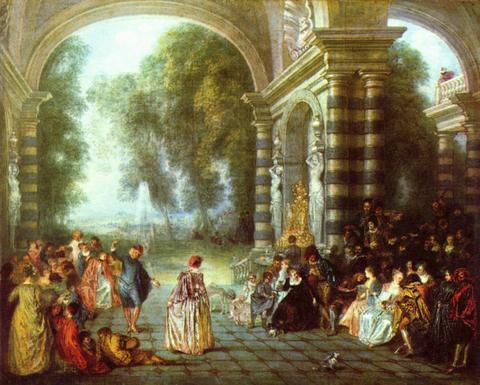 We used to have biographies from the ODNB. We have a poetry day: on Wednesdays I send in a favorite 18th century poem (1660-1830). I invite discussion of film adaptations of novels/memoir and history written during this period and 20th century historical fiction set in it. I also do what I can to forward to the list "calls for papers," conferences, and relevant cultural events. The list is now a place in cyberspace where most of the
postings are about what we read on our own.
Nonetheless, the goal of the list is to be a community of people exploring and discussing the long eighteenth century, with particular attention to the milieu of the later 17th century century, Enlightenment values, the growth of a literary marketplace and modern world (which includes the invention of new genres like the novel and forms of autobiography), and the Romantic movement and French revolution.  A Few Rules to ensure CourtesyIn order to prevent discomfort, hurt feelings, trolling, flame wars and other disruptions on our list, to secure acourteous and cordial atmosphere, and to ensure that this list remains a place where serious scholarly talk predominates, as listowner I ask everyone to read and to abide by the following explicit rules:
|